By Mattheus Rikus Wessels
“If no one does anything, what will happen to the world?” – Corlevin Kalalo

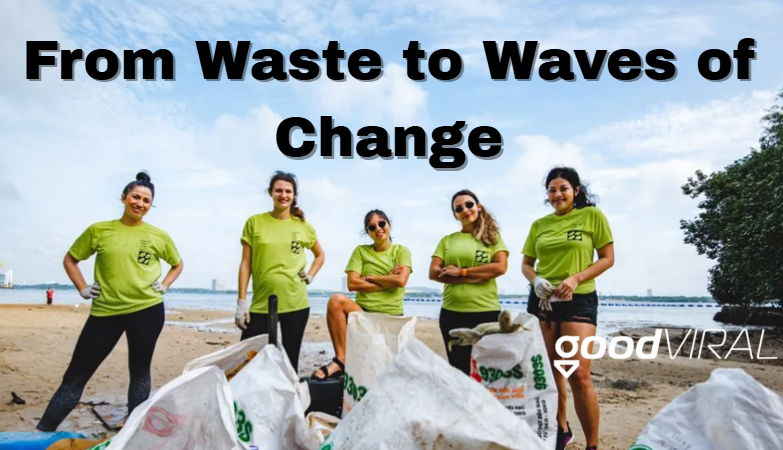
In the turquoise waters surrounding Indonesia’s 17,000 islands, a silent crisis unfolds. Millions of tonnes of plastic flood the oceans every year, a problem so vast that it equates to dropping five Great Walls of China into the sea annually. The weight is staggering, but it’s not just the numbers that alarm; it’s the human stories behind them.
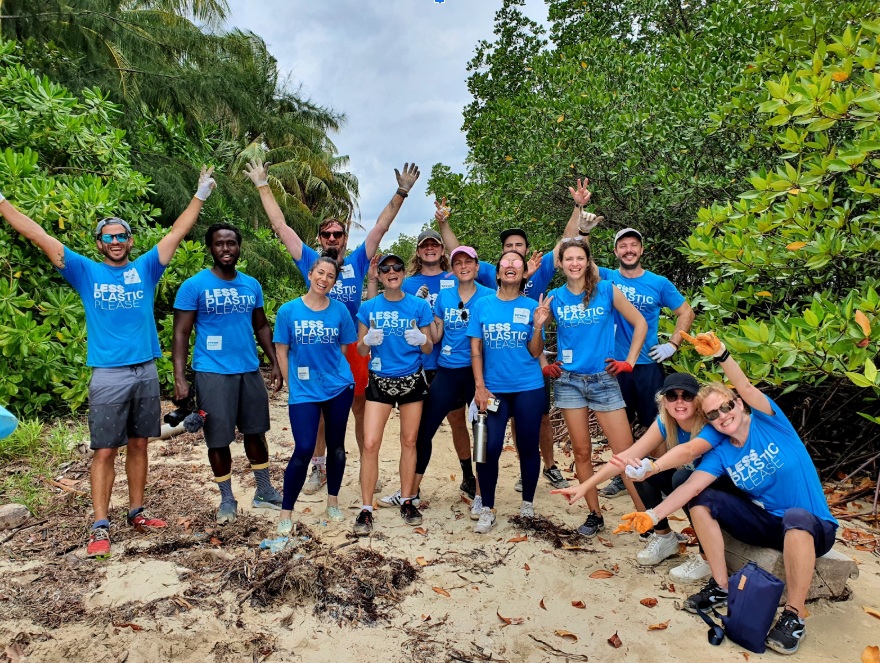
One of those stories belongs to Corlevin Kalalo, Projects Director at Seven Clean Seas, an organization that is redefining what it means to clean our oceans. In an interview with the GoodViral podcast, Corlevin shares not just data, but a deeply personal connection to the beaches of his youth. “I fell in love with the beach and never looked back,” he says. But returning decades later, the shores of Bali were no longer pristine. Plastic waste now carpeted the same sand that had once sparked his environmental passion.
The Scale of the Plastic Crisis
Globally, over 450 million tonnes of plastic are produced each year, but only 9% is ever recycled. The rest ends up in landfills, incinerators, or, far too often, in our oceans. According to the UN, 11 to 14 million tonnes of plastic leak into marine environments every year. That’s roughly the equivalent of one garbage truck of plastic dumped into the ocean every single minute.
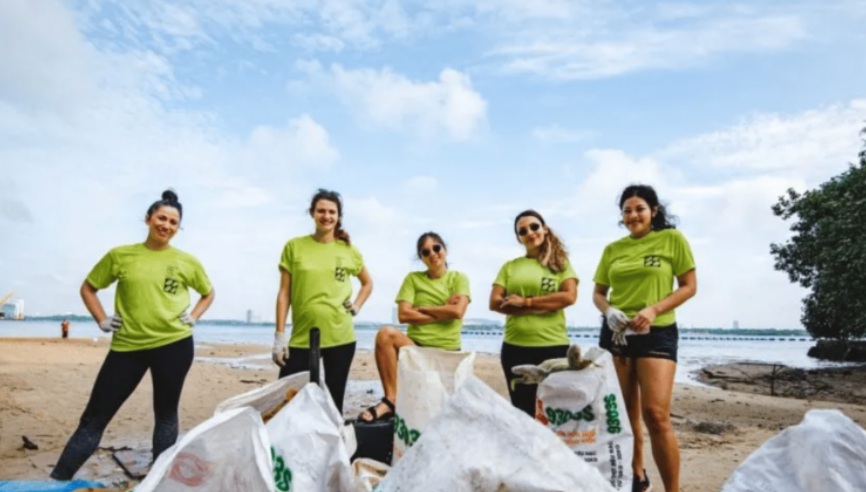
The impact is no less visible on our shorelines. While exact global figures are difficult to pin down, the scale is sobering. One study estimates that up to 8.3 billion plastic straws have already washed up on beaches around the world. In one stark example, Henderson Island, a remote, uninhabited island in the South Pacific, was found to contain 37.7 million pieces of plastic debris, weighing over 17.6 tonnes.
The numbers may be massive, but the consequences are deeply personal, affecting food, water, wildlife, and entire communities.
These figures underscore the relentless tide of plastic pollution and highlight the urgent need for scalable, collaborative solutions to protect our oceans and shorelines.
In countries like Indonesia, the problem is compounded by infrastructure gaps. With a population dispersed across thousands of islands, access to proper waste management is inconsistent at best. As Corlevin explains, “We focus on islands with no infrastructure… change starts where people are overlooked.”
A Model That Works: Uplift, Upgrade, Upscale
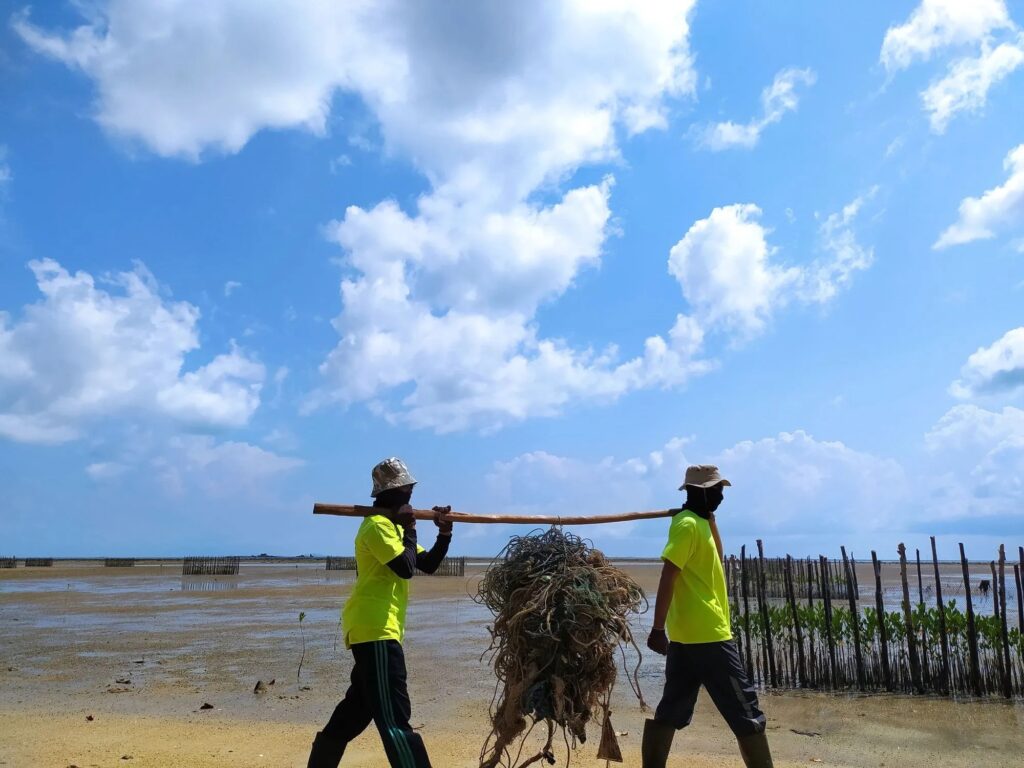
Seven Clean Seas doesn’t just clean up beaches, they build systems. Their approach is rooted in three strategic pillars:
- Uplift communities through education and inclusion
- Upgrade with innovative, tech-driven collection systems
- Upscale by creating sustainable employment and local manufacturing
Corlevin says, “People don’t see waste collection as a job, so we made it one.”
In Bintan Island, where their pilot project began in 2018, this model has already employed over 100 locals. These workers, all hired from within the communities most affected, are trained and formally employed with fair wages, social security, insurance, and consistent schedules.
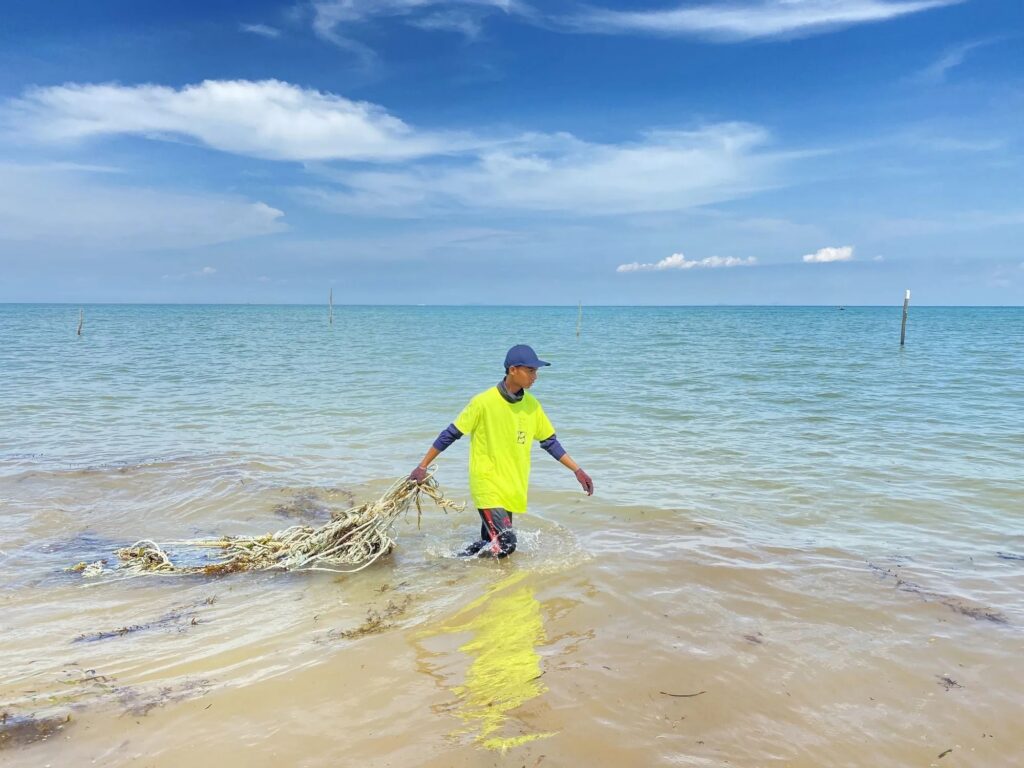
Their task? To collect, sort, and process ocean-bound plastic. And then, to do something extraordinary with it.
Turning Trash into Shelter
Seven Clean Seas has pioneered a method of converting LDPE plastic (the same found in plastic bags) into durable roof tiles. Each tile contains roughly 2.5 kilograms (5.51 pounds/lbs) of plastic. The organization recently renovated homes in a community plagued by asbestos roofing,a health hazard all too common in under-resourced areas. Corlevin notes that “[They are] turning ocean trash into safe, useful products.”
But it’s not just about infrastructure. It’s about narrative. In one coastal village, an eight-year-old girl began telling her classmates that the blue roof tiles on her family’s home were made from ocean plastic. To her, it wasn’t recycling. It was magic. Her story spread from classroom to courtyard, and soon the tale of the blue-roofed house became a local legend. That little girl began educating her peers, turning as Kalalo reflects, a roof into a story. And the story turned into a mission.
Scaling Change in Southeast Asia
With current operations in Indonesia and Thailand, Seven Clean Seas has already removed over 5 million kilograms of plastic from marine environments. And they’re just getting started. 3 million kilograms of plastic is the same as about 6.6 million pounds. That’s roughly the weight of 1,000 fully loaded school buses.
Imagine a convoy of bright yellow buses stretching down the highway, bumper to bumper, each one packed to the brim with nothing but plastic waste. That’s how much we’re talking about. Not a drop in the ocean. A tide.
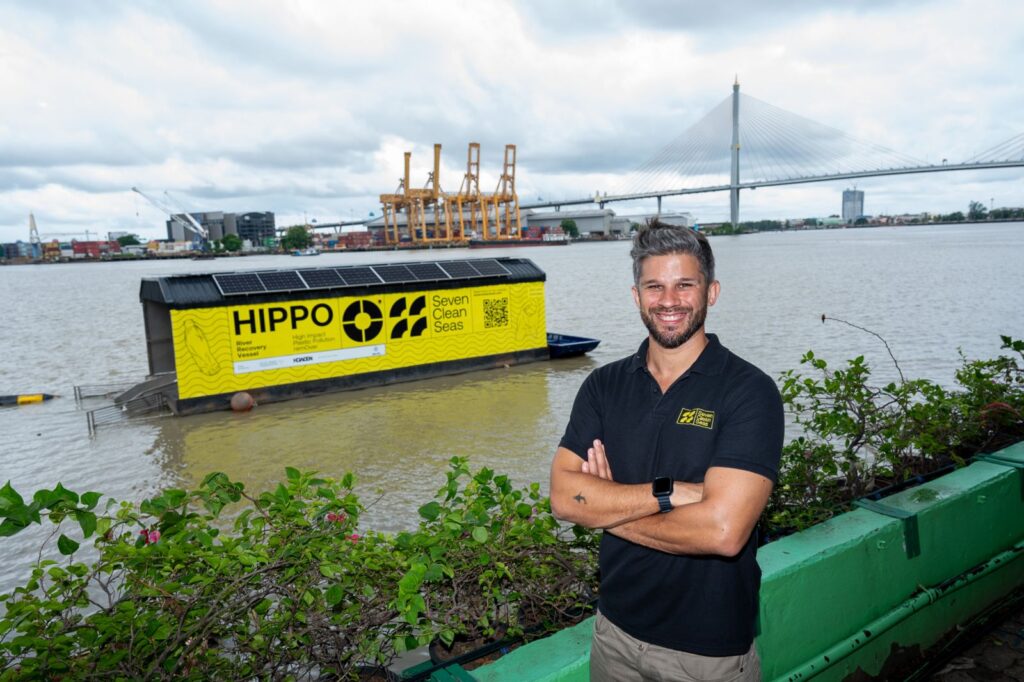
Their technology includes HIPPO units, a type of scalable, modular barrier system that intercepts plastic before it reaches the sea. These are deployed strategically in high-leakage zones and integrated with local waste management infrastructure.
The result? A circular economy that creates local jobs, transforms waste, and educates future generations. “Every tiny thing you do for the environment does matter.”
Seven Clean Seas is building a circular economy around ocean plastic by combining waste recovery, recycling, and sustainable business practices. Their cleanup operations in regions like Indonesia and Thailand remove plastic from the environment, which is then sorted for recycling or repurposed into materials like bricks or alternative fuel (ECCA Foundation). Through their consultancy, they help companies reduce plastic use and implement closed-loop strategies (SCS Consultancy). Businesses can also purchase plastic credits to offset their footprint, funding ethical, third-party-certified collection projects (Seven Clean Seas). At the community level, SCS creates fair employment and runs education programs to promote long-term sustainability.
A Global Model
What makes Seven Clean Seas truly remarkable is their replicability. Kalalo outlines how their “Uplift, Upgrade, Upscale” framework could be duplicated in other coastal regions facing similar challenges. The model is low-cost, high-impact, and community-first. “Sustainable impact needs a sustainable solution, and that involves the community.”
With international interest rising, the potential for global partnerships is growing. From NGOs and governments to businesses looking to offset their plastic footprints, Seven Clean Seas represents a solution that is practical, measurable, and scalable.
The Urgency Is Now
“The plastic that enters the ocean today becomes someone’s health risk tomorrow.” Plastic pollution is not a distant threat. It’s already in our oceans, our food, and our bodies. And if left unchecked, it will shape the world we leave behind.
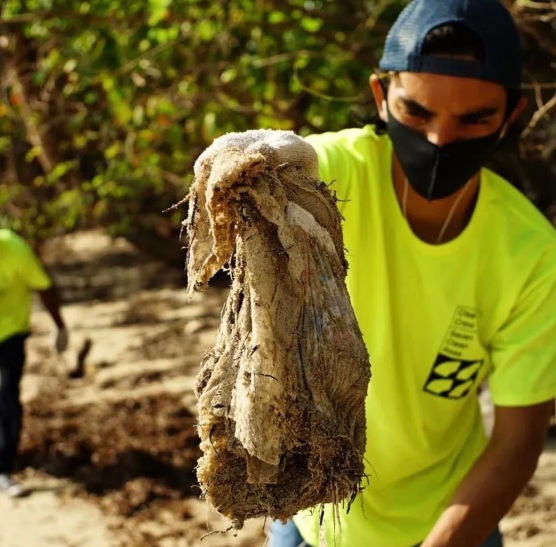
Scientists have now detected microplastics in human blood, lungs, and even placental tissue, raising urgent questions about long-term health impacts. In a 2022 paper published in Environment International, researchers confirmed the presence of plastic particles in human blood, suggesting that plastics can travel through the body and potentially lodge in organs. Microplastics have also been identified in human placentas, as reported in Environmental Health Perspectives.
Every year, 14 million tonnes of plastic enter the ocean, where it breaks down into tiny particles that infiltrate marine food chains and eventually enter the human diet. The World Economic Forum warns that by 2050, plastic could outweigh all the fish in the sea if current trends continue.
This is not just an environmental crisis. It is a growing public health and human rights issue.
This is not just an environmental crisis; it’s a public health and human rights issue in the making.
But as Corlevin reminds us, change is possible. It begins with a choice: to be part of the problem or part of the solution.
So what will you choose?
Get Involved: Help Seven Clean Seas Make Waves
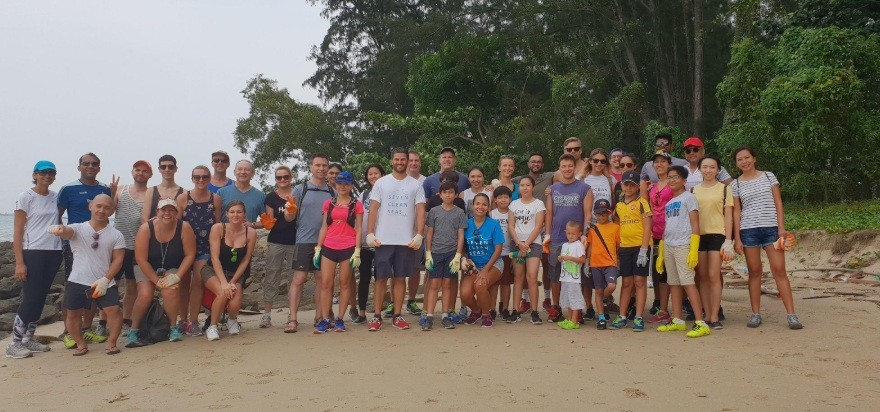
Ready to be part of the solution? Here’s how you can help:
- Donate: Support their clean-up crews and technology by contributing here.
- Volunteer: Whether you’re in Southeast Asia or working remotely, explore volunteer opportunities.
- Partner: Are you a company looking to offset plastic use or support circular economy initiatives? Reach out to explore partnership options.
- Follow & Share: Amplify their impact by following @sevencleanseas on Instagram and sharing their story.
- Educate: Talk to your community about microplastics, plastic alternatives, and how local action has global reach.
Want to go beyond the headlines?
Listen to the full GoodViral episode on Spotify or Apple, or watch it on YouTube to hear how ordinary people are driving extraordinary change. This isn’t just a story about plastic. It’s about purpose, creativity, and the power of community.
GoodViral brings you conversations with people turning bold ideas into impact, and this one might just shift how you see waste, storytelling, and what’s possible when the right minds connect.
Let’s turn waste into change.
Let’s make pristine beaches go viral.