By Mattheus Rikus Wessels
“The future of kelp is positive. It’s emerging. It’s a bright spot in environmental conservation.”
– Dr Aaron Eger, Founder, Kelp Forest Alliance
The Forest You’ve Never Walked Through
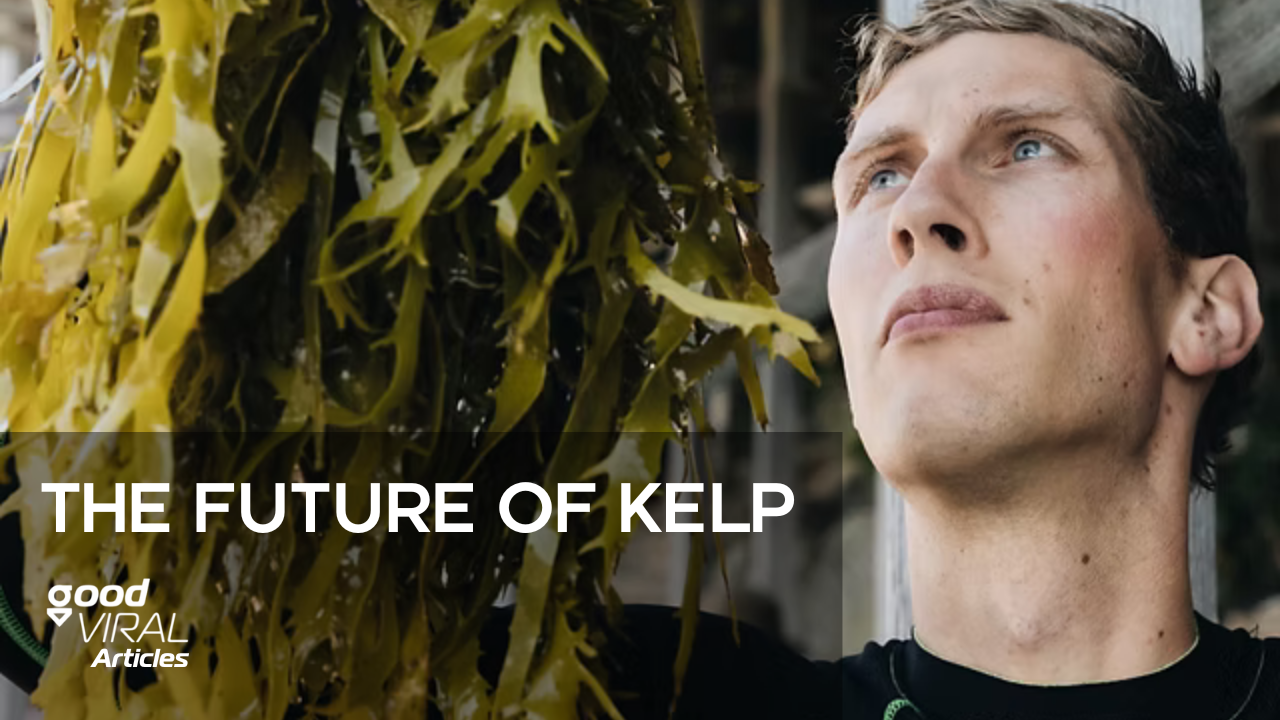
As a guest on an episode with the GoodViral podcast team, marine ecologist Dr Aaron Eger, founder of the Kelp Forest Alliance, sat down with Anastasia and Demian to dive deep into the story of kelp: why it’s vanishing, why it matters, and how a global movement is rising to restore it. What follows is a synthesis of their compelling conversation, supported by current research, global restoration efforts, and practical ways for anyone to join the fight for our blue forests.
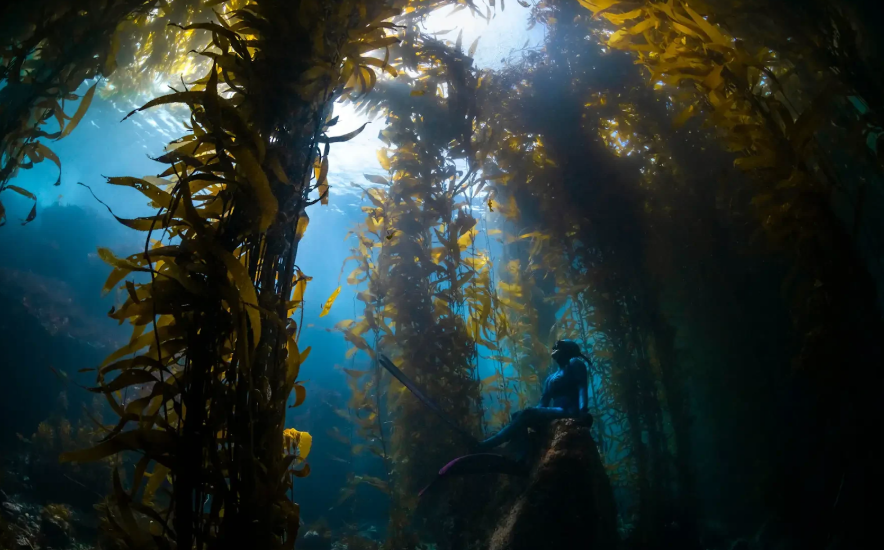
Imagine a rainforest so powerful it could slow climate change, shelter entire marine ecosystems, and bounce back in just a few seasons, yet barely anyone talks about it. Welcome to the kelp forest.
Dr Aaron Eger, marine ecologist and founder of the Kelp Forest Alliance, joined the GoodViral podcast to surface a truth hidden beneath the waves: kelp may be the most underrated ecological superhero of our time.
The case of Australia
Kelp forests, once abundant across the globe, are now disappearing at an alarming rate. This vital marine habitat is being destroyed by a lethal mix of rising sea temperatures, overgrazing, overfishing, and water pollution.
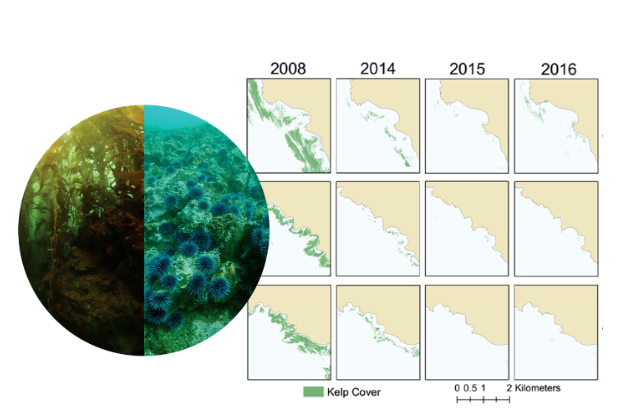
Many of these losses are extreme. In Southern Australia, the once-thriving giant kelp forests have been reduced to a mere 5% of their original size within living memory. Northern California has seen an even more dramatic decline, losing up to 96% of its bull kelp in less than a decade. Heatwaves off the coast of Western Australia wiped out kelp from 100 kilometers of coastline, and in Japan, declining kelp populations have forced the closure of centuries-old abalone fisheries. This isn’t just a few isolated cases; kelp forests on every continent are shrinking.
What Is Kelp, and Why Should You Care?
Kelp forests grow along one-third of our planet’s coastlines, from Cape Town to California, and play a foundational role in the health of our oceans. They grow rapidly. Up to two feet per day in some cases, and form underwater canopies that rival terrestrial forests in complexity and life.
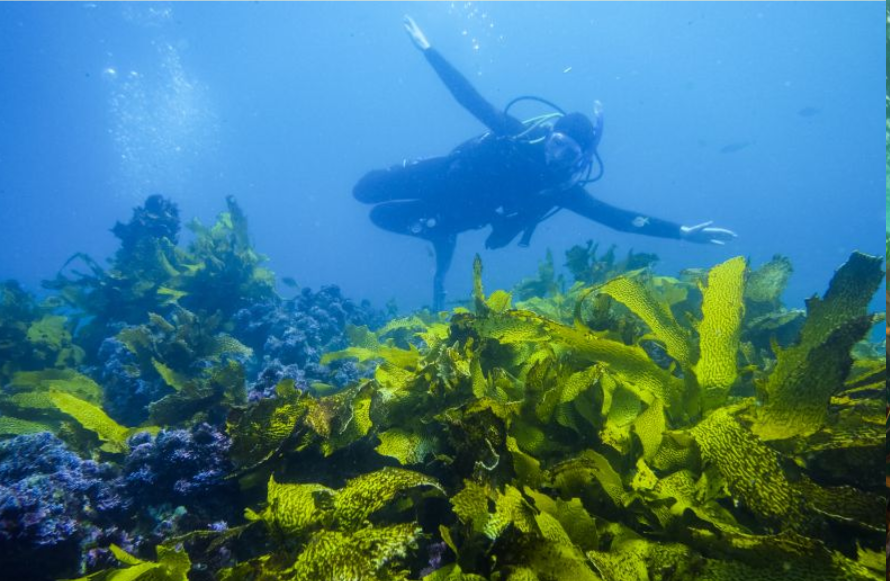
But these submerged giants are disappearing. From marine heatwaves to overfishing and pollution, the threats are mounting. “If the same things happening in the ocean were happening in the Amazon, we’d be up in arms,” Eger points out on the podcast.
Kelp is not the seaweed on your sushi. It’s a keystone species that provides:
- Habitat for thousands of species, including fish, seals, sea otters, and even whales
Carbon capture on a massive scale, an estimated 32 million tonnes of CO₂ annually from natural kelp forests alone - Oxygen production, nutrient cycling, and even coastal protection through wave buffering
- Food and cultural connection for marine communities across Korea, Canada, Chile, and beyond
“Kelp forests are incredibly important because they provide shelter and food for so many species. They act as nurseries for fish, offer a home to sea otters, and even help reduce ocean acidification by absorbing carbon dioxide.”
– Dr Aaron Eger
From Forest to Desert
One of the podcast’s most jarring images is what happens when kelp disappears. “You go from this lush underwater forest to something like the moon,” Eger explains. “Bare rock. No life.” This is no exaggeration. The collapse of kelp forests leads to the collapse of everything they support: fisheries, biodiversity, tourism, and even food security.
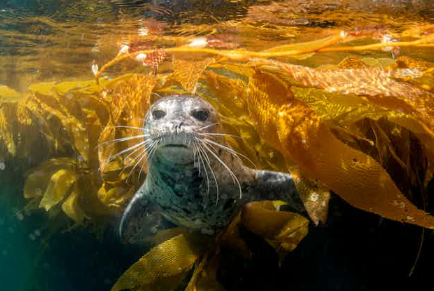
A prime example? The California coast, where exploding populations of sea urchins (due to the loss of natural predators) have devoured entire kelp beds, leaving vast “urchin barrens” in their wake.
Why South Korea Is Leading the Way
While most countries are only beginning to understand kelp’s value, South Korea has been investing in it for over a decade. In 2009, the government launched the Sea Forestation Programme, a bold initiative to restore 54,000 hectares of kelp forests by 2030. To help visualize 54,000 hectares, consider that it’s roughly equivalent to 540 square kilometers, or an area about half the size of metropolitan London. It’s also significantly larger than many well-known cities. For example, it’s roughly 2.5 times the size of Washington, D.C.
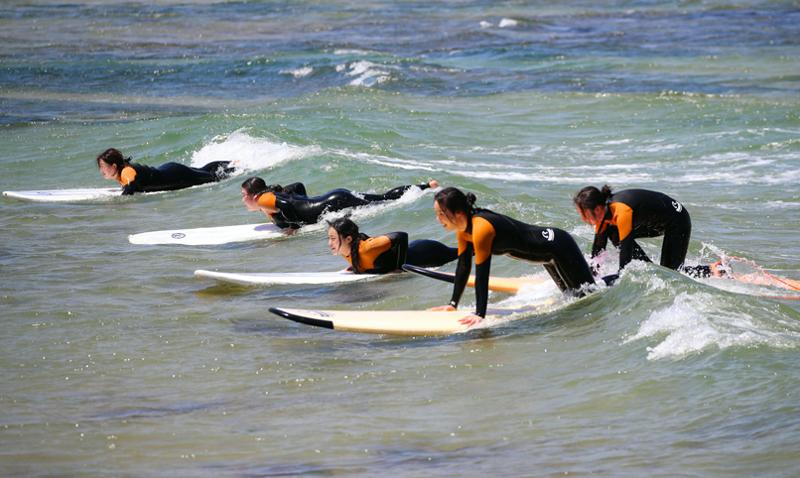
As of 2024, nearly 29,000 hectares have been restored, with a success rate of about 50%, making it the largest kelp restoration project in the world (Kelp Forest Alliance).
To raise public awareness, Korea also declared May 10th as Marine Gardening Day, a national event where citizens plant seaweed and rehabilitate marine ecosystems. The day celebrates the philosophy of reciprocity with the ocean: if we care for it, it can continue to care for us.
“They’ve done the right thing in every category: policy, investment, public awareness. It’s a model for the world.”
– Dr Aaron Eger
The Global Kelp Challenge
The Kelp Forest Alliance is now spearheading a campaign to protect and restore 4 million hectares of kelp globally by 2040. This includes:
- 3 million hectares protected through policy and conservation
- 1 million hectares restored using techniques from around the world, including South Korea’s aquaculture-based models
“Restoration efforts are vital, but they’re not just about planting kelp. It’s about creating the right conditions, from water quality to species balance, for kelp to thrive.”
– Dr Aaron Eger
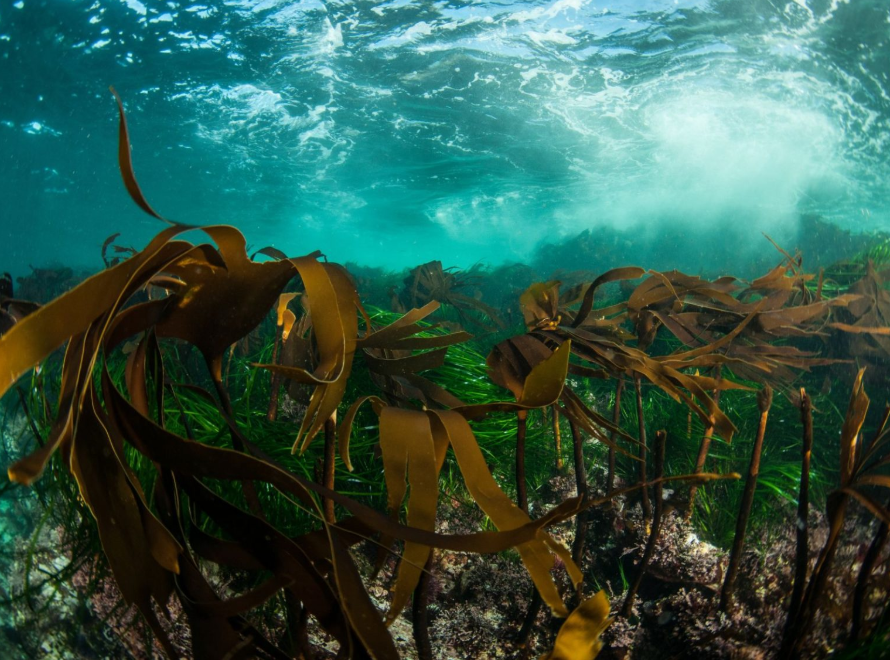
The movement is growing. Tech giants like Google are contributing AI tools to help map kelp beds. Marine communities are co-developing restoration strategies. And public interest is beginning to catch on.
“When people understand kelp’s importance and get involved in protecting it, it sparks a larger movement that makes a huge difference.”
– Dr Aaron Eger
What Can You Do?
Kelp isn’t just an ocean issue. It’s a climate issue, a cultural issue, a food security issue: and yes, a human issue. Whether you’re a marine biologist or a marketing intern, you have a role to play.
- Join the movement – Become part of the Kelp Forest Alliance
- Learn your backyard – Explore marine habitats near you via Ocean Data Viewer
- Support restoration – Donate to projects like SeaTrees
- Spread awareness – Share this article or the podcast (GoodViral Interview with Dr. Eger)
- Get inspired – Watch My Octopus Teacher, filmed in a South African kelp forest (A film I’ve watched more than 10 times.)
“Kelp is there, waiting for you to interact with it. And there’s a whole world you can unlock once you take a look.”
– Dr Aaron EgerListen to the full interview on:
Want to go beyond the headlines?
Listen to the full GoodViral episode on Spotify or Apple, or watch it on YouTube to hear how ordinary people are driving extraordinary change.